Before the first sip, there is the small business of making coffee. Filling, closing, waiting. A handle taken in the hand. These gestures are so familiar that a well-considered object can slip into the morning almost unnoticed.
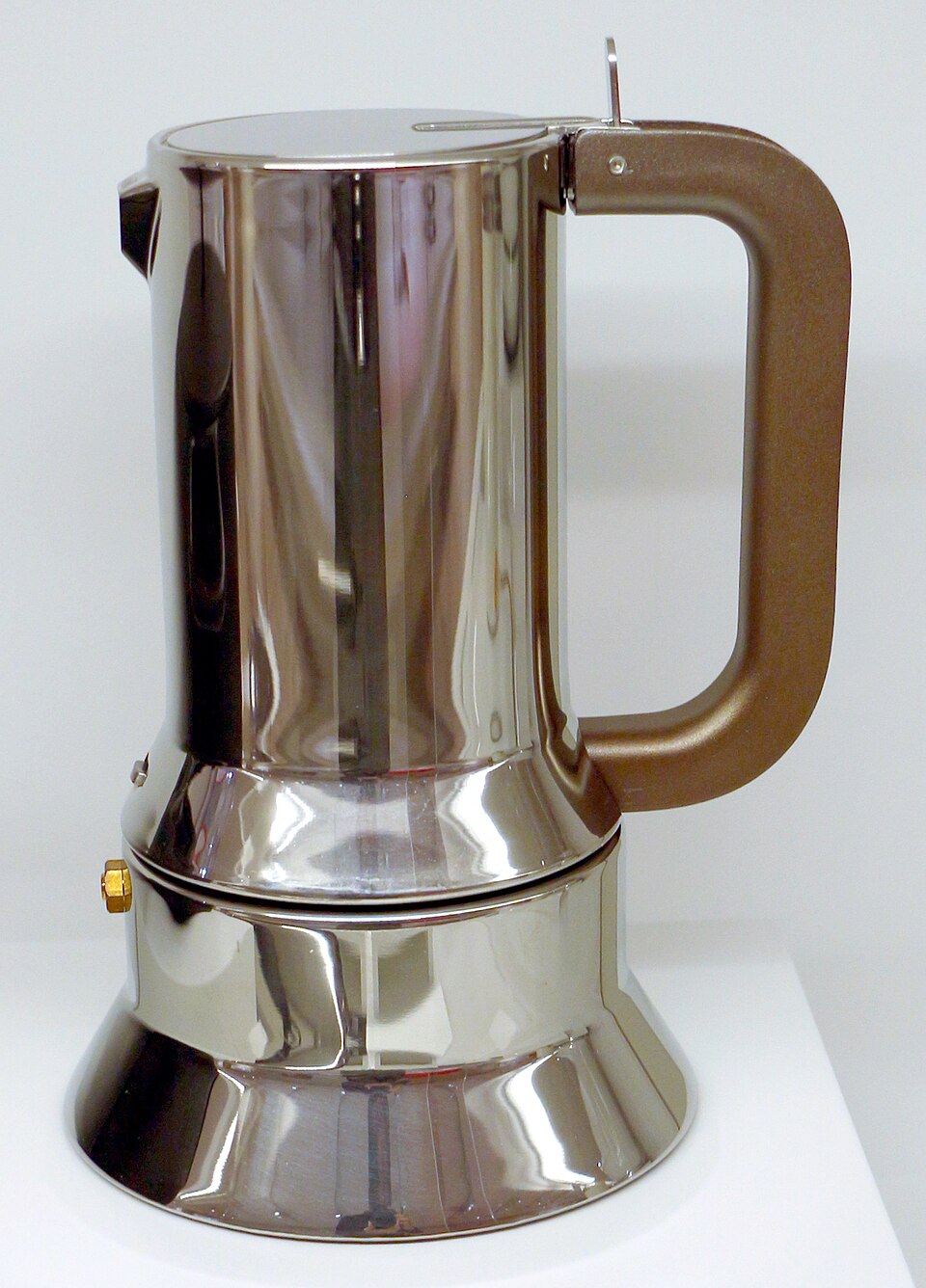
Richard Sapper’s 9090, designed for Alessi in 1978, rewards a closer look. Its stainless-steel body has a broad base, a compact silhouette and a handle that also works as a lever closure. The mechanism gives the hand a particular job to do. There is pleasure in that small act of understanding.
The 9090 received the Compasso d’Oro in 1979 and entered the Museum of Modern Art’s permanent collection. Yet the more interesting test for a coffee maker happens away from the museum: does it deserve to be used again tomorrow?
An object earns affection through contact. The right weight when it is full; a spout that pours cleanly; the way it sits beside a cup rather than dominating the table. These are modest requirements, though meeting them beautifully takes considerable thought.
There is a useful parallel with breakfast. A familiar thing can hold a surprising amount of judgement. Proportion matters. So does the moment when elaboration stops. The aim is a morning that feels a little more considered, without becoming a performance.
Put the coffee on. Choose a cup with a handle you like. Leave room on the plate for the crumbs.
Explore the Richard Sapper archive and Alessi’s 9090.
Image: Richard Sapper’s 9090 for Alessi. Photograph by Sailko; colour balance by Inehmo. CC BY 3.0. Resized; display crop varies by screen.
All observations ↗