There is a moment when sugar begins to look like something else. Clear gives way to straw, then honey, then a deeper amber. The change can be watched, but it cannot be held in place for long.
As sugar cooks and darkens, caramel develops a broader range of flavours. Light caramel and a darker, more assertive version offer different pleasures. The colour is a clue to that difference, and a reason to pay close attention to the pan.
Caramel has an unusually expressive range of forms. Poured thin and allowed to set, it can break into sharp, glassy pieces. With other ingredients and a different finish, it becomes a sauce or a soft layer. One starting material, several possibilities for the mouth.
The contrast is part of its appeal. A brittle edge against something soft. A little bitterness beside sweetness. Salt catching up at the end. A familiar flavour becomes more interesting when the surrounding textures give it something to answer.
Watch caramel being made and the word “craft” becomes quite practical. It lives in the decision to wait, and then the decision to stop. A recipe supplies a route; attention determines the finish.
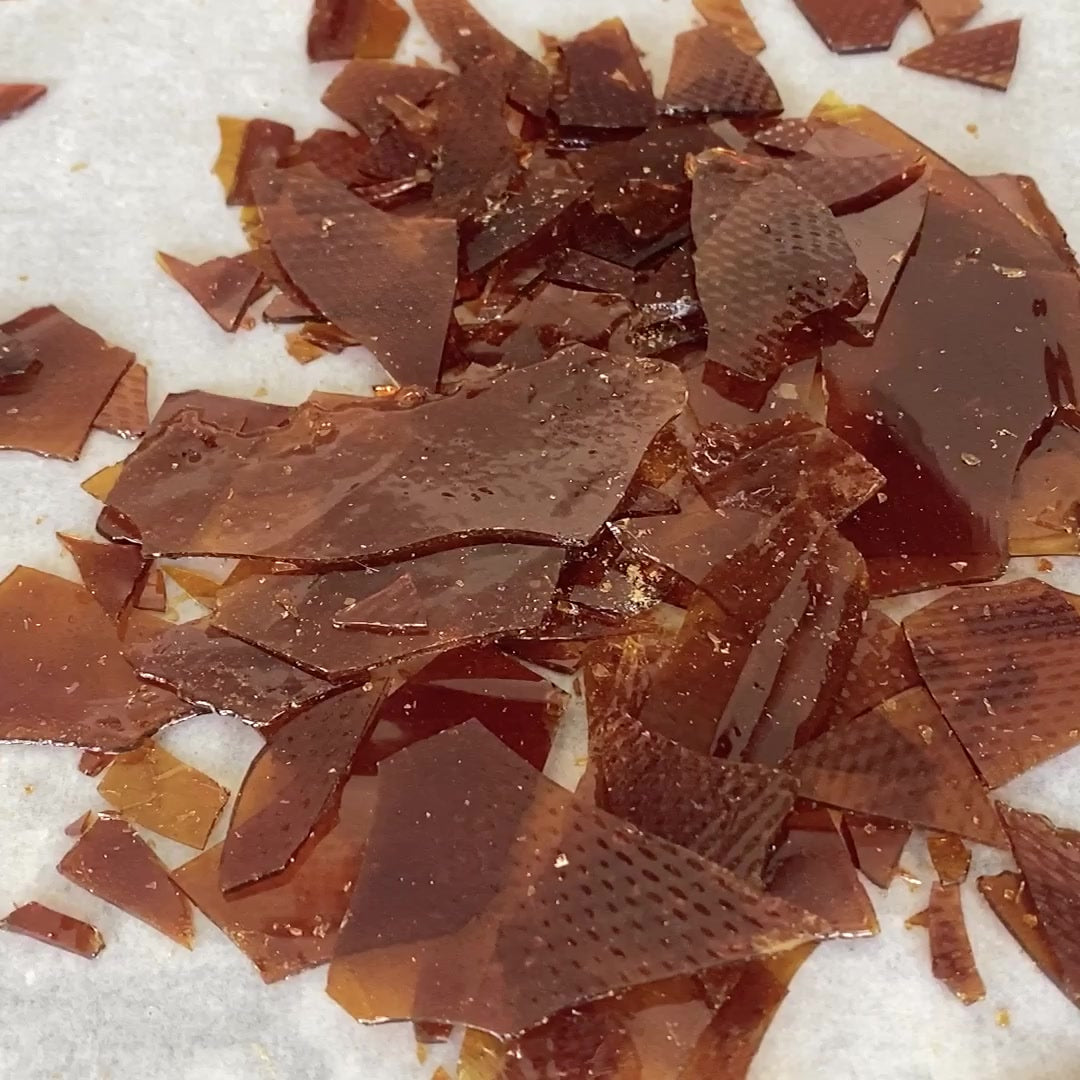
It also gives the eye something to enjoy. Hold a thin shard to the light and its darkest edge can turn luminous. The same colour might suggest polished wood, a piece of old glass or the crust of a well-baked loaf.
Amber is a useful colour to keep in mind. In the kitchen, it rarely means that nothing is happening.
Further reading: King Arthur Baking on making caramel and its many forms in baking.
Image: caramel shards, a still from the Saint Ava making footage.
All observations ↗